
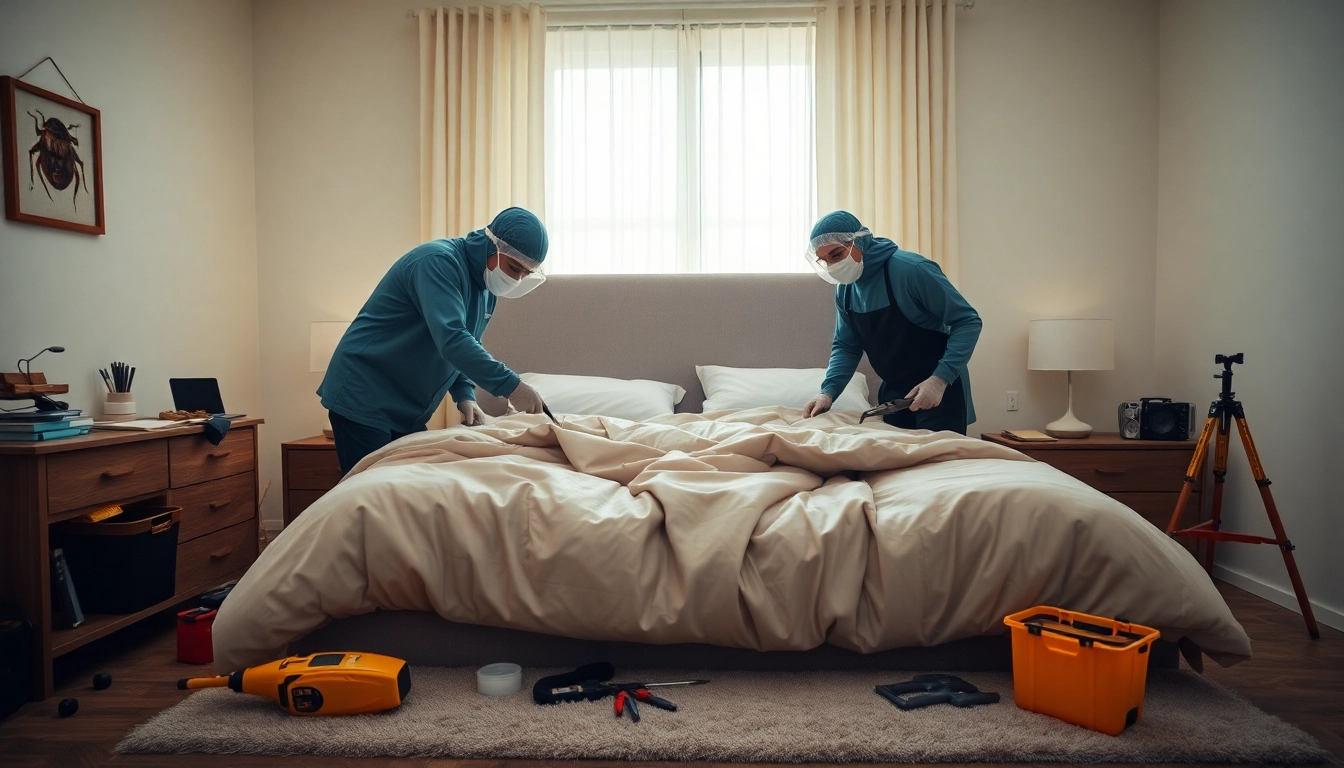
Understanding Bed Bugs and Their Behavior
What Are Bed Bugs?
Bed bugs are small, reddish-brown insects that feed on human blood, primarily at night. They belong to the Cimicidae family and are scientifically known as Cimex lectularius. Adult bed bugs are about 4-5 mm long, resembling apple seeds, while their younger stages, or nymphs, are significantly smaller and can be nearly transparent until they feed. Bed bugs are notorious for their resilience and adaptability, making them a significant pest problem in many urban and suburban areas around the world.
Signs of Bed Bug Infestation
Identifying the signs of a bed bug infestation early is crucial for effective pest control. Common signs include:
- Red, itchy bites: Often found in clusters or lines on the body, particularly on exposed skin.
- Live bugs: Adult bed bugs can be visible in bedding, furniture, and dark crevices.
- Fecal spots: Dark spots on sheets or furniture, resulting from digested blood.
- Shed skins: Bed bugs undergo molting, leaving behind their exoskeletons.
- Musty odor: A sweet, musty smell may indicate a larger infestation.
Common Hiding Spots of Bed Bugs
Bed bugs are adept at hiding in various locations within a home. Their most common hiding spots include:
- Beds: Mattresses, box springs, and bed frames.
- Furniture: Upholstered couches, recliners, and cabinets.
- Wall cracks: Gaps in walls, baseboards, and electrical sockets.
- Baggage: Suitcases and backpacks, often from travel.
Importance of Professional Bed Bug Exterminators
Why Choose Experts Over DIY?
While there are various DIY approaches available to tackle bed bug infestations, relying on professional bed bug exterminators is often more effective. Professionals possess the expertise, experience, and resources to identify the extent of the infestation accurately and apply suitable treatments tailored to the specific problem. DIY treatments may lack the potency required for complete eradication and could prolong the infestation.
What to Expect During an Extermination Service
When hiring exterminators, you can expect a thorough assessment of your home, detailing the level of infestation. Following the inspection, exterminators typically discuss the best treatment options, which may include chemical treatments, heat applications, or a combination. The service may require pre-treatment preparations, and there may be follow-up visits to ensure the effectiveness of the extermination.
Key Benefits of Professional Treatments
Opting for professional treatments comes with several advantages:
- Comprehensive solutions: Experts use advanced techniques to eliminate not just visible bed bugs but also their eggs and larvae.
- Long-term results: A professional approach often leads to fewer recurrences, ensuring peace of mind.
- Safety measures: Exterminators are trained to use chemicals safely, minimizing risks to occupants and pets.
- Efficiency: Professionals can typically resolve significant infestations quicker than DIY methods.
Methods Used by Bed Bug Exterminators
Heat Treatment Explained
Heat treatment is a popular method for many bed bug exterminators. This technique involves raising the temperature in an affected area to a level that is lethal to bed bugs, usually around 118°F (48°C). The process requires specialized equipment to ensure that all areas, including hard-to-reach spots, are effectively treated. Heat treatment has several advantages, including the ability to kill all life stages of bed bugs without chemical reliance.
Chemical Solutions for Bed Bugs
Chemical extermination methods employ insecticides that target bed bugs directly. These substances must be carefully selected to ensure safety and effectiveness. Licensed exterminators know how to use these chemicals effectively and safely to minimize health risks. Modern insecticides typically target bed bug nerve receptors, leading to rapid mortality, while some formulations work over a longer duration to eliminate eggs and larvae as they hatch.
Integrated Pest Management Techniques
Integrated Pest Management (IPM) combines multiple strategies for an effective approach to pest management. This technique focuses on preventive measures, monitoring, and targeted treatments rather than relying solely on chemical solutions. Bed bug exterminators employing IPM may conduct detailed inspections, provide homeowners with guidance on reducing clutter, and educate on how to avoid bringing bed bugs into the home in the first place.
Preparing Your Home for Treatment
Steps to Take Before Extermination
Proper preparation is essential to maximize the effectiveness of bed bug extermination treatments. Homeowners should remove clutter around the affected areas, wash bedding and clothing in hot water, and vacuum thoroughly prior to the exterminator’s arrival. It’s crucial to follow all the specific instructions provided by the pest control professionals to ensure the best outcome.
How to Protect Your Belongings
Before treatment, protecting your belongings is critical. Use sealed plastic bags to store clothing, linens, and personal items that may harbor bed bugs. Consider removing items from treated rooms to prevent contamination or re-infestation. Ensure that items stored in closets and storage areas are treated or cleaned thoroughly.
Post-Treatment Guidelines for Homeowners
After the treatment, homeowners should follow specific guidelines to maintain effectiveness. This includes avoiding vacuuming or washing treated areas for at least two weeks to maximize the exposure of bed bugs to the treatment. Homeowners should also keep an eye out for any signs of returning infestations and contact their exterminators immediately if they notice them.
FAQs About Bed Bug Exterminators
1. How quickly can bed bug extermination be completed?
Bed bug extermination duration can vary based on the extent of the infestation. A single treatment session may take a few hours, but follow-up visits are often necessary for complete eradication.
2. What should I do if bed bugs return after treatment?
If bed bugs reappear, contact your exterminator immediately. A professional should reevaluate the situation and implement additional treatments as needed to resolve the issue.
3. Are the chemicals used by exterminators safe for my family?
Most professional-grade pest control products are designed to be safe when used as directed. Your exterminator will provide information on safety measures, including when to return to treated areas.
4. How can I avoid future bed bug infestations?
To prevent future infestations, regularly inspect your home for signs of bed bugs, especially after travel. Reduce clutter, use protective covers on mattresses, and be cautious about bringing used furniture indoors.
5. What is the average cost of hiring bed bug exterminators?
The cost of hiring bed bug exterminators may vary widely based on the severity of the infestation, location, and chosen treatment methods, typically ranging from a few hundred to several thousand dollars.