
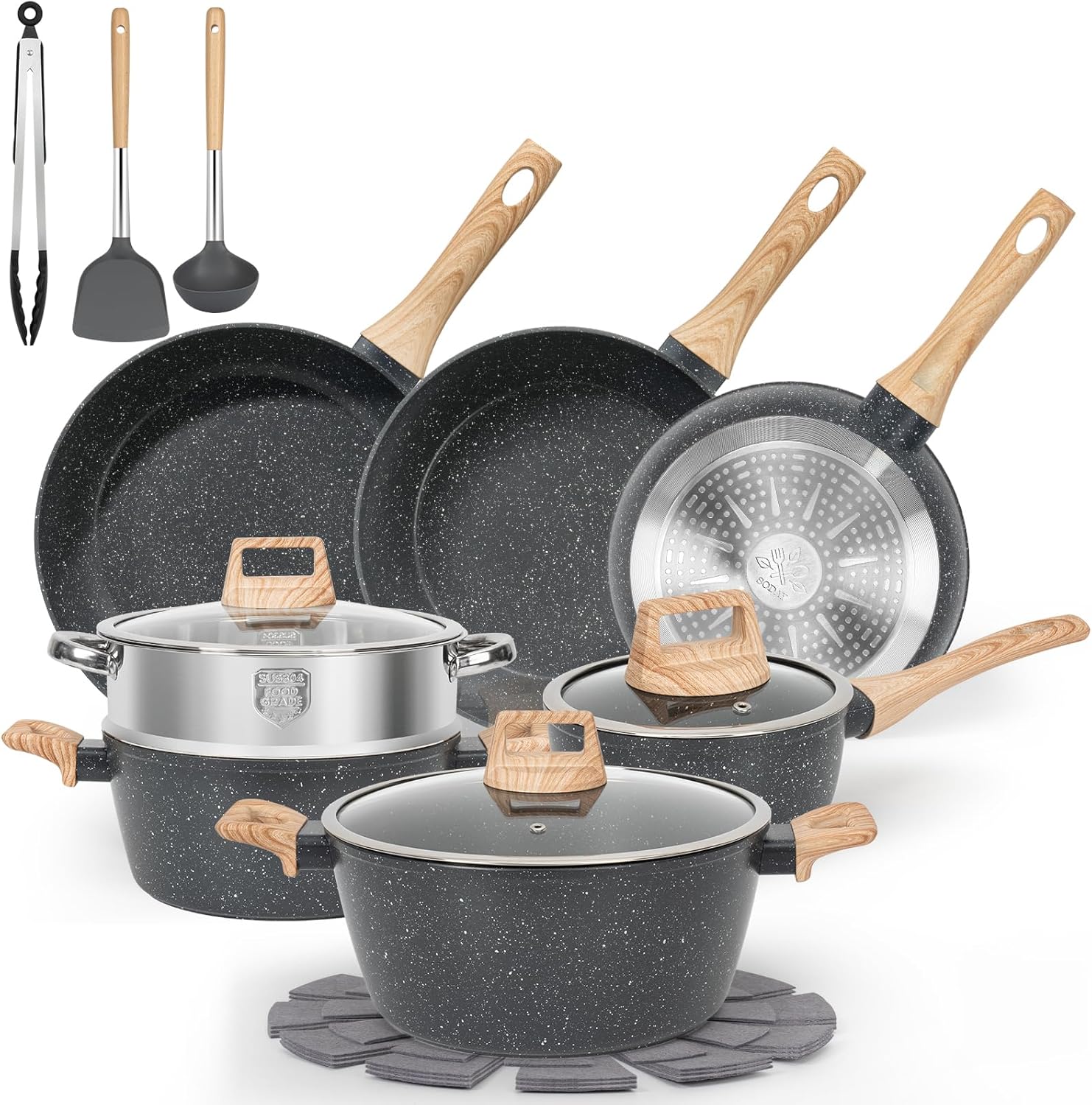
Choosing the right Cookware material can completely transform your cooking experience. At Magic Chef, we understand that the material of your Cookware affects heat distribution, durability, maintenance, and the final taste of your food. With so many options available, identifying the best Cookware for your kitchen can feel confusing. This guide breaks down each major material to help you select Cookware that fits your style, your recipes, and your everyday needs.
Why Cookware Material Matters
The material of your Cookware determines how quickly it heats, how evenly it cooks, and how long it lasts. Whether you prefer fast-paced sautéing or slow simmering, the right Cookware material ensures you get the results you want. Some Cookware excels at browning, others at easy cleanup, and others at retaining heat. Understanding these differences helps you invest wisely in Cookware that performs consistently.
Stainless Steel Cookware
Stainless steel Cookware remains one of the most reliable options for home cooks. Known for its durability and resistance to rust, this type of Cookware offers excellent heat control when paired with aluminum or copper cores. It’s perfect for browning meats, simmering sauces, and making everyday meals. Although stainless steel Cookware doesn’t have a nonstick surface, proper preheating helps prevent sticking. If you want long-lasting performance, stainless steel Cookware is a top contender.
Pros
- Extremely durable and scratch-resistant
- Ideal for high-heat cooking
- Non-reactive with acidic foods
Cons
- Requires technique to prevent sticking
- Can be heavier than other Cookware materials
Nonstick Cookware
Nonstick Cookware is a favorite among busy home cooks who want easy cleanup and low-oil cooking. Modern nonstick surfaces are safer and more durable than older coatings, making this Cookware ideal for eggs, pancakes, and delicate ingredients. While nonstick Cookware can’t handle extremely high heat, it remains a practical everyday option.
Pros
- Easy cleanup
- Great for low-fat cooking
- Lightweight and beginner-friendly
Cons
- Coatings can wear down over time
- Not suitable for high-temperature searing
Cast Iron Cookware
Cast iron Cookware is beloved for its unmatched heat retention and ability to develop natural nonstick seasoning. Whether you’re searing steak or baking cornbread, cast iron Cookware delivers impressive results. It’s heavier than other materials, but its durability makes it a long-term kitchen investment.
Pros
- Excellent heat retention
- Perfect for baking, frying, and searing
- Can last for generations
Cons
- Requires seasoning and regular maintenance
- Heavy and slower to heat
Ceramic Cookware
Ceramic Cookware has grown in popularity due to its smooth, naturally nonstick surface and attractive appearance. True ceramic and ceramic-coated Cookware both offer even heating for everyday meals. If you prefer safer, coating-free surfaces, ceramic Cookware is a great choice for low- and medium-heat cooking.
Pros
- Naturally slick surface
- Free from chemical coatings
- Stylish and colorful options available
Cons
- Can chip or wear faster than stainless steel
- Not suitable for very high heat
Copper Cookware
Copper Cookware stands out for its exceptional heat responsiveness, making it a preferred material for serious cooks. Because copper reacts quickly to temperature changes, it gives you precise control. Copper Cookware is often lined with stainless steel to prevent food reactions.
Pros
- Fastest heating Cookware material
- Excellent for delicate cooking
- Eye-catching design
Cons
- Expensive
- Requires polishing to maintain shine
Aluminum Cookware
Aluminum Cookware is lightweight, affordable, and offers excellent heat conductivity. Most aluminum Cookware today is anodized or coated to prevent reactions with acidic foods. This makes it a versatile and budget-friendly choice.
Pros
- Lightweight and easy to handle
- Even heating
- Cost-effective
Cons
- Uncoated aluminum can react with foods
- Softer metal may scratch without proper coating
How to Choose the Best Material for Your Kitchen
The best Cookware material depends on your cooking style. If you enjoy high-heat searing, stainless steel or cast iron Cookware works best. For simple everyday meals, nonstick or ceramic Cookware offers convenience. If precision matters, copper Cookware provides unmatched control. Consider factors like weight, cleaning preference, stovetop compatibility, and how often you cook before choosing your Cookware.
Conclusion
Choosing the right Cookware material gives you confidence in the kitchen and elevates every dish you prepare. By understanding the strengths and limitations of each type, you can invest in Cookware that suits your daily habits and cooking goals. With the right materials on hand, your kitchen becomes more efficient, more enjoyable, and better equipped for every recipe you tackle.