Choosing the right garage flooring options is essential for creating a functional, safe, and visually appealing space. Whether you primarily use your garage for parking vehicles, as a workshop, a home gym, or additional storage, the flooring you select can significantly impact durability, maintenance needs, and overall aesthetics.
At Superior Garage Flooring, we understand how crucial it is to match your garage flooring with your lifestyle, environment, and budget. In this guest post, we’ll explore the most popular and effective garage flooring options, explain their benefits and drawbacks, and provide actionable tips to help you make the best decision for your home.
- Why Garage Flooring Options Matter
- Popular Garage Flooring Options
- Factors to Consider When Choosing Garage Flooring Options
- Why Professional Garage Flooring Installation Matters
- Enhancing Your Garage with Superior Garage Flooring
- How to Maintain Your Garage Flooring
- Frequently Asked Questions About Garage Flooring Options
- Final Thoughts on Choosing Garage Flooring Options
Why Garage Flooring Options Matter
Garages face unique challenges that other indoor spaces do not. Exposure to vehicle fluids, heavy equipment, dirt, moisture, and wide temperature fluctuations means your flooring needs to be tough and resilient. Beyond durability, good flooring should improve safety by offering slip resistance and easy cleanup, plus contribute to the overall look and feel of your garage.
Many homeowners underestimate the importance of garage flooring, but selecting the right option can protect your investment, reduce maintenance time, and even increase your home’s value. Let’s break down the main types of garage flooring available and what makes each suitable for different needs.
Popular Garage Flooring Options
1. Epoxy Flooring
Epoxy coating is one of the most popular garage flooring options due to its strength and versatility. It is a two-part resin applied over concrete that hardens into a smooth, glossy, and durable surface.
Benefits:
- Resistant to oil stains, chemicals, and abrasion
- Easy to clean with just soap and water
- Available in a variety of colors and decorative chips or flakes for a customized look
- Creates a seamless, waterproof surface that protects underlying concrete
Considerations:
- Professional installation is recommended for best results
- Surface preparation is critical improper prep can lead to peeling or bubbling
- Takes time to cure (usually several days) before use
2. Polyurea Coatings
Polyurea is a newer, highly durable coating that competes with epoxy but offers faster curing times and greater flexibility.
Benefits:
- Cures within hours, minimizing downtime
- Superior resistance to UV rays, heat, and extreme temperature changes
- More flexible than epoxy, reducing cracking risk
- Long-lasting with excellent chemical and abrasion resistance
Considerations:
- Higher upfront cost compared to epoxy
- Requires professional application
- Limited availability compared to epoxy products
3. Interlocking Garage Tiles
Interlocking tiles are modular pieces made from durable plastics like polypropylene or PVC that fit together over your existing floor.
Benefits:
- Easy, DIY-friendly installation
- Wide variety of colors, textures, and styles
- Tiles can be replaced individually if damaged
- Provides good traction and a comfortable surface to stand on
Considerations:
- Can trap moisture underneath if not properly ventilated
- May not be as durable as coatings under heavy vehicle traffic
- Edges can sometimes lift if not installed correctly
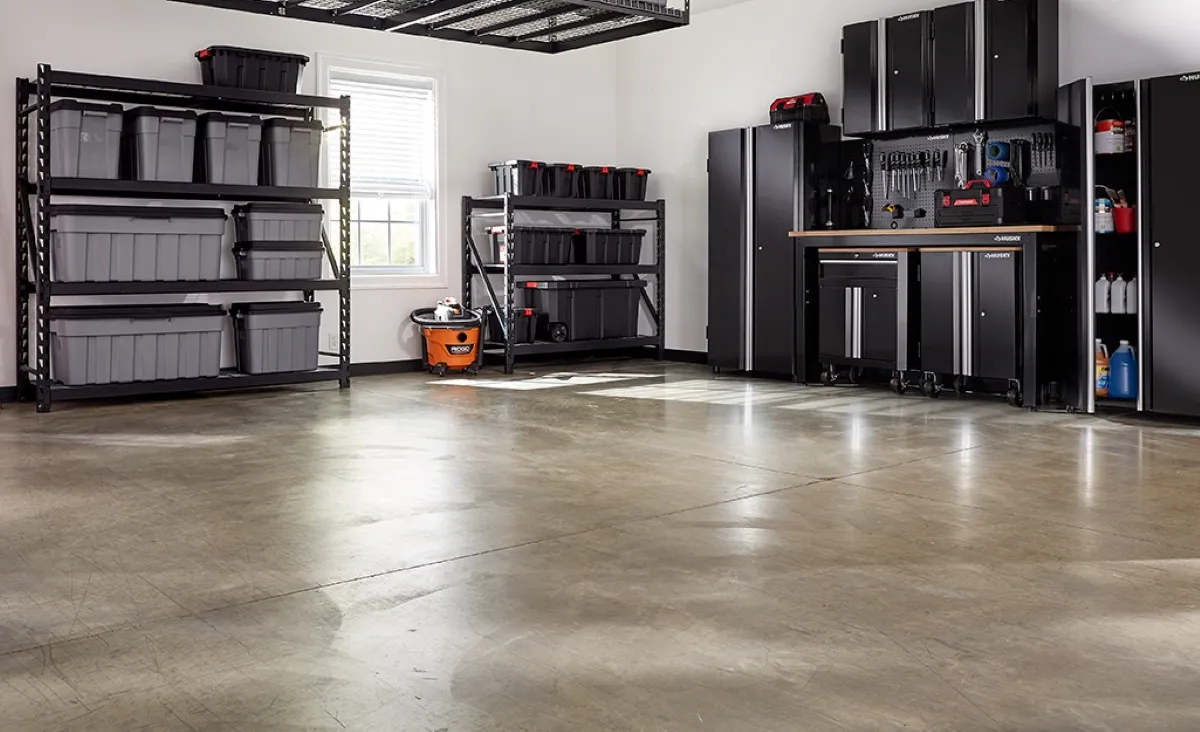
4. Concrete Staining and Sealing
For homeowners who prefer the natural look of concrete but want added protection, staining and sealing is a cost-effective option.
Benefits:
- Enhances the natural appearance with rich colors and patterns
- Sealer protects against moisture, dust, and mild stains
- Retains the concrete’s durability while improving aesthetics
Considerations:
- Does not protect as well against heavy chemical spills
- Sealing requires reapplication every few years
- Surface may be slippery unless textured or treated with an anti-slip additive
5. Rubber Flooring
Rubber mats or rolls are often used in garages converted into workout spaces or workshops, where cushioning and slip resistance are priorities.
Benefits:
- Provides a cushioned, anti-fatigue surface
- Highly slip-resistant and safe for exercise areas
- Resistant to oils, chemicals, and impacts
- Easy to clean and replace individual sections
Considerations:
- May absorb odors over time if not cleaned regularly
- Can be more expensive than other options for full coverage
- Not as visually appealing for traditional garages focused on aesthetics
Factors to Consider When Choosing Garage Flooring Options
Your choice should reflect how you use your garage and the environment it’s in. Here are key factors to guide your decision:
Usage Patterns
- Vehicle Storage: Heavy-duty coatings like epoxy or polyurea are best for frequent vehicle traffic and weight loads.
- Workshop or Gym: Consider rubber flooring for cushioning or interlocking tiles for flexibility and comfort.
- Storage/Utility: Concrete staining or sealing provides adequate protection with minimal investment.
Climate and Environment
- Humidity and Moisture: Polyurea coatings and sealed concrete are excellent for garages prone to dampness. Avoid flooring that traps moisture under tiles or mats without ventilation.
- Temperature Fluctuations: Polyurea’s flexibility makes it suitable for areas with extreme heat or cold, preventing cracking.
Maintenance Expectations
- Low Maintenance: Epoxy, polyurea, and sealed concrete require minimal upkeep just regular sweeping and occasional mopping.
- Moderate Maintenance: Rubber flooring and interlocking tiles need periodic cleaning and care to avoid odor or dirt buildup.
Budget
- DIY-Friendly: Interlocking tiles and rubber mats can be installed without professional help and are budget-friendly.
- Professional Investment: Epoxy and polyurea coatings typically require professional preparation and installation, increasing initial costs but improving longevity.
Appearance and Style
Your garage floor contributes to your home’s overall aesthetic. Consider color options, textures, and finishes that complement your personal style, whether sleek and modern or rugged and industrial.
Why Professional Garage Flooring Installation Matters
While some garage flooring options lend themselves to DIY installation, professional installation offers clear benefits, especially for coatings like epoxy and polyurea.
- Surface Preparation: Professionals ensure the concrete is cleaned, repaired, and prepped correctly for optimal adhesion.
- Expert Application: Precise mixing and application avoid issues like bubbling, peeling, or uneven coating.
- Access to Quality Products: Contractors use industrial-grade materials designed for longevity.
- Warranty and Support: Many installers provide guarantees and advice on care to maximize the lifespan of your floor.
Choosing professional installation reduces the risk of costly mistakes and extends the durability of your garage flooring.
Enhancing Your Garage with Superior Garage Flooring
At Superior Garage Flooring, based in Litchfield Park, AZ, we specialize in delivering premium garage flooring options customized to your unique needs. Whether you want the resilience of epoxy, the flexibility of polyurea, or the convenience of interlocking tiles, our team guides you through every step from consultation to flawless installation.
Our process:
- Free Onsite Assessment: We evaluate your garage space, usage, and condition.
- Tailored Recommendations: Based on your needs, style preferences, and budget, we suggest the best flooring solutions.
- Professional Installation: Our skilled installers use top-quality products and proven techniques.
- Ongoing Support: We provide maintenance tips and service options to keep your floor looking great for years.
How to Maintain Your Garage Flooring
Maintaining your garage flooring is key to preserving its appearance and functionality.
- Epoxy and Polyurea: Clean spills immediately to avoid staining. Use mild detergents and avoid abrasive scrubbers. Sweep regularly to prevent dirt buildup.
- Interlocking Tiles: Sweep and mop as needed. Periodically check and replace damaged tiles to prevent hazards.
- Stained Concrete: Reapply sealer every few years and clean with pH-neutral cleaners. Avoid harsh chemicals that may break down the seal.
- Rubber Flooring: Wipe down with water and mild soap. Avoid solvents and chemicals that degrade rubber.
Regular maintenance will help your garage floor withstand wear and tear while maintaining its beauty.
Frequently Asked Questions About Garage Flooring Options
Q: How long do garage flooring options typically last?
A: With proper installation and care, epoxy and polyurea coatings can last 10 to 20 years. Interlocking tiles and rubber flooring generally last 5 to 10 years, depending on use and maintenance.
Q: Can I install garage flooring myself?
A: Some options like interlocking tiles and rubber mats are DIY-friendly. Coatings like epoxy and polyurea, however, require expert surface prep and application for best results.
Q: What flooring is best for humid or wet climates?
A: Polyurea coatings and sealed concrete offer excellent resistance to moisture and temperature changes, making them suitable for such environments.
Q: How much does professional garage flooring installation cost?
A: Costs vary widely based on the flooring type and garage size. Epoxy and polyurea coatings usually cost more due to materials and labor, while tiles and rubber mats are more affordable.
Final Thoughts on Choosing Garage Flooring Options
Choosing the right garage flooring option is about more than looks it’s a long-term investment in durability, safety, and style. By understanding the strengths and limitations of epoxy, polyurea, interlocking tiles, stained concrete, and rubber flooring, you can select a solution that fits your garage’s unique demands.
Professional expertise from Superior Garage Flooring ensures you get the best materials, precise installation, and reliable support to maximize your garage’s value and usability. Ready to explore your garage flooring options? Visit superiorgarageusa.com or contact us today for your free consultation.