Understanding Land Irrigation Basics
Land irrigation is a critical aspect of modern agriculture, enabling the efficient use of water to enhance crop productivity. It involves various methods and technologies designed to transfer water from its source to the fields where crops are grown. With rising global food demands, understanding effective land irrigation strategies becomes increasingly important for sustainable farming practices. More details can be found regarding land irrigation.
What is Land Irrigation?
Land irrigation refers to the process of applying controlled amounts of water to crops to support their growth. This technique ensures that plants receive the necessary moisture to thrive, especially in areas where rainfall is insufficient or erratic. The practice can be traced back thousands of years, evolving from simple flood irrigation methods to advanced systems that conserve water and optimize plant health.
Importance of Systems for Farmers
For farmers, implementing effective land irrigation systems can mean the difference between a fruitful harvest and crop failure. These systems help in managing water availability, enhancing soil fertility, and reducing salinity. Additionally, they contribute to the economic viability of farming operations, allowing for consistent crop yields even during periods of drought.
Common Techniques Used in Land Irrigation
Farmers employ a variety of techniques to manage irrigation efficiently:
- Flood Irrigation: Water is allowed to flow over the field, soaking into the soil.
- Drip Irrigation: Water is delivered directly to the roots of plants through a network of tubing.
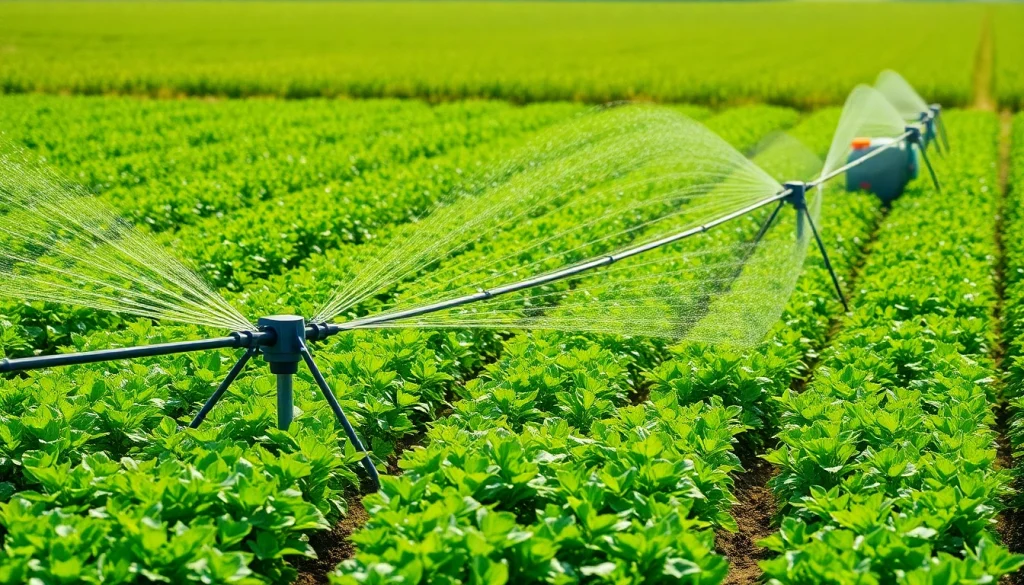
- Sprinkler Irrigation: Water is distributed via a system of pipes and sprays, mimicking natural rainfall.
- Subsurface Irrigation: Water is supplied below ground level, targeting root zones directly.
Types of Land Irrigation Systems
Surface Irrigation Techniques
Surface irrigation remains one of the oldest methods, utilizing gravity to move water across the land. This technique is simple and cost-effective but requires careful management to prevent water wastage. It is often employed in large fields where terrain allows for effective water flow. Key considerations include:
- Topography of the land
- Soil type and infiltration rates
- Proper slope for effective drainage
Drip Irrigation Advantages
Drip irrigation is highly efficient, applying water directly to the plant’s root zone, which significantly reduces evaporation and runoff. Some notable advantages include:
- Conserves water, making it ideal for arid regions.
- Minimizes weed growth due to precise water application.
- Can be automated, adjusting water supply based on environmental conditions.
Sprinkler Systems Overview
Sprinkler irrigation functions similarly to natural rainfall, distributing water over the crop area through a series of pipes and pumps. This method is versatile and can be adapted to various crops and terrains, offering advantages such as:
- Uniform water distribution across different areas.
- Ability to cover large areas efficiently.
- Reduced soil erosion compared to surface irrigation systems.
Optimizing Land Irrigation for Efficiency
Water Usage Efficiency Metrics
To maximize water usage, it is important for farmers to monitor efficiency metrics that indicate how effectively water is being used in relation to crop yield. Metrics such as the crop water requirement, irrigation efficiency ratio, and yield per unit of water can help in assessing the performance of irrigation systems. Using these metrics, farmers can identify areas for improvement and adjust their practices accordingly.
Adapting to Climate Variations
Climate change has led to increased variability in weather patterns, impacting water availability and agricultural practices. Farmers must adopt flexible irrigation practices that can be adjusted based on seasonal trends, such as:
- Monitoring rainfall and adjusting irrigation schedules accordingly.
- Implementing rainwater harvesting systems.
- Employing drought-resistant crop varieties.
Implementing Smart Technologies
The rise of smart irrigation technologies has transformed traditional practices, allowing farmers to utilize precise data for optimal performance. Innovations include soil moisture sensors, automated control systems, and mobile apps for monitoring weather conditions. Integrating these technologies can lead to significant water savings and improved crop yields.
Challenges in Implementing Land Irrigation
Common Obstacles Farmers Face
Despite advances in irrigation technology, farmers encounter numerous challenges when implementing land irrigation systems. These challenges can include:
- High initial costs associated with purchasing and installing advanced systems.
- Maintenance requirements that may be overlooked, leading to system failures.
- Regulatory restrictions regarding water use and availability.
Environmental Impact Considerations
Irrigation can affect local ecosystems and water quality, particularly if not managed sustainably. Excessive irrigation can lead to waterlogging, soil salinity, and reduced biodiversity. To mitigate these impacts, farmers should:
- Monitor soil and water quality regularly.
- Implement best practices that minimize runoff and conserve natural habitats.
- Engage in crop rotation and cover cropping to enrich the soil.
Cost Management in Irrigation
Cost is a significant concern for many farmers when considering land irrigation solutions. Effective cost management involves evaluating the total cost of ownership, including installation, operation, and maintenance. Some strategies may include:
- Seeking grants or subsidies for sustainable irrigation projects.
- Conducting thorough cost-benefit analyses before implementation.
- Exploring co-operative purchasing options with other farmers.
Future of Land Irrigation Practices
Innovations on the Horizon
The future of land irrigation is set to be shaped by continuous innovation in technology and practices. Advances such as AI for predictive analytics, remote sensing technologies, and enhanced soil conditioners will play a crucial role in optimizing water usage and improving crop resilience against climate challenges. Keeping abreast of these developments is essential for farmers aiming to stay competitive.
Sustainability Trends in Agriculture
Sustainable practices in agriculture, including land irrigation, are becoming increasingly mainstream as consumers demand more eco-friendly products. Trends include regenerative agriculture, precision farming, and integrated water management approaches that not only boost efficiency but also protect natural resources. Farmers adopting these trends ensure their long-term viability while addressing environmental concerns.
Community-Driven Irrigation Projects
Many regions are seeing a shift towards community-driven irrigation initiatives that allow for shared resources and knowledge. These projects encourage collaboration among farmers, fostering a sense of community and collective problem-solving. They are particularly beneficial in developing areas, where pooling resources can substantially reduce costs and improve irrigation efficiency.
Frequently Asked Questions
1. What is the most efficient irrigation method?
Drip irrigation is typically considered the most efficient method as it delivers water directly to the root zone, minimizing evaporation and runoff.
2. How can farmers manage water resources better?
Farmers can improve water management by utilizing soil moisture sensors, practicing rainwater harvesting, and adopting drought-resistant crops.
3. What are the environmental impacts of irrigation?
Potential environmental impacts include waterlogging, soil salinity, and decreased local biodiversity if irrigation is not managed responsibly.
4. How can technology improve irrigation practices?
Smart technologies like automated systems and remote sensing can help farmers optimize water usage, enhance efficiency, and reduce costs.
5. Why is community involvement important in irrigation projects?
Community involvement fosters collaboration, reduces costs, and improves resource management, leading to more sustainable irrigation practices.