
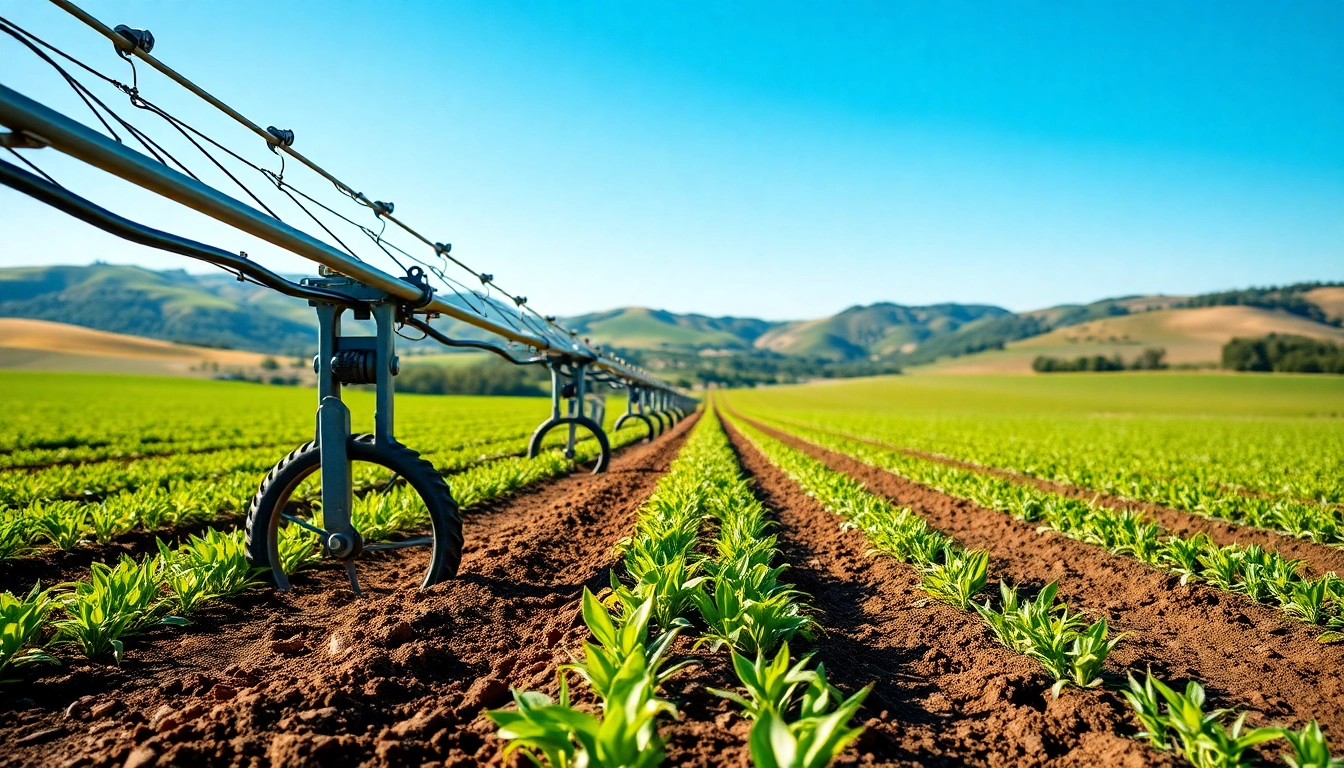
Understanding Land Irrigation
What is Land Irrigation?
Land irrigation is the artificial application of water to soil to assist in the growing of crops. This method has been a crucial aspect of agriculture since ancient times and is essential for enhancing crop yields in regions where rainfall is insufficient. There are various techniques and systems used to implement land irrigation, each tailored to meet specific agricultural needs. The process involves sophisticated planning and execution to maximize water efficiency, reduce waste, and support healthy crop growth. The importance of this practice is amplified in the context of global challenges such as climate change and increasing food demand. Land irrigation has evolved significantly over the years, incorporating modern technologies and methods that support sustainability.
The Importance of Land Irrigation in Agriculture
Irrigation is pivotal in agriculture, especially in arid and semi-arid regions. It ensures a regular supply of moisture to crops, improving their growth patterns and overall health. Here are a few reasons highlighting its importance:
- Enhanced Crop Yields: With the right irrigation methods, farmers can significantly improve the quantity and quality of their produce.
- Diverse Crop Options: Irrigation allows farmers to cultivate a wide variety of crops that might otherwise not survive in certain climates.
- Farming Predictability: Reliable irrigation provides farmers with control over water supply, leading to more predictable harvests and reduced risks of crop failure.
- Soil Health Management: Adequate moisture levels help to maintain soil structure and nutrient availability, nurturing healthy ecosystems.
Types of Land Irrigation Systems
Understanding the different types of irrigation systems helps farmers select the most appropriate method for their crop and environmental conditions. The main systems include:
- Drip Irrigation: Involves a network of tubes delivering water directly to the root zone, minimizing water loss and evaporation.
- Sprinkler Irrigation: This system simulates rainfall, distributing water over the crop area using pipes and overhead spray heads.
- Surface Irrigation: Water is applied directly to the soil surface by gravity, with furrows or basin systems directing water to plants.
- Subsurface Irrigation: Water is delivered below the soil surface, fostering efficient moisture management and allowing for reduced evaporation.
Key Techniques for Effective Land Irrigation
Drip Irrigation for Precision Watering
Drip irrigation is often considered the most efficient way to water crops. By delivering water directly to the roots, it reduces waste and enhances crop productivity. Some key benefits of drip irrigation include:
- Water Conservation: Reduces water usage by minimizing evaporation and runoff.
- Improved Soil Quality: Even moisture distribution helps maintain soil health.
- Reduced Weeds: Targeted watering discourages weed growth.
The installation of a drip irrigation system involves careful planning, including the layout of hoses, emitters, and any necessary pumping equipment. Smart irrigation controllers can also automate the system based on soil moisture levels, ensuring optimal watering schedules.
Sprinkler Systems for Uniform Coverage
Sprinkler irrigation mimics natural rainfall, dispersing water through a system of pipes and nozzles. The versatility of this system makes it suitable for various crops and terrains. Important features of sprinkler systems include:
- Adaptability: Suitable for different crops, terrains, and climates.
- Effective Coverage: Provides uniform water distribution, reducing dry spots.
- Management Ease: Can be combined with other irrigation methods for optimal moisture control.
Farmers often benefit from scheduling their sprinklers based on weather conditions, soil moisture data, and growth stages of the crops to ensure efficiency.
Surface Irrigation Methods and Their Benefits
Surface irrigation is one of the oldest forms of irrigation, where water flows over the soil surface to reach plant roots. It includes methods like furrow, basin, and flood irrigation. While this method requires more labor than modern systems, its simplicity and effectiveness offer several benefits:
- Cost-Effective: Lower initial investment compared to advanced systems.
- Reliable Source: Doesn’t require electricity or extensive infrastructure, making it accessible in rural areas.
- Natural Water Distribution: Optimal for certain crops and soil types, as water naturally spreads to wet surrounding areas.
Surface irrigation requires careful design to account for field slope, soil type, and crop requirements to avoid excessive runoff and erosion.
Implementing an Efficient Land Irrigation Plan
Assessing Soil and Water Resources
The first step in developing an irrigation plan is to assess the soil type and water availability. Conducting soil tests can provide insights on:
- Soil moisture retention capacity
- Nutrient composition and health
- Drainage ability and pH levels
Furthermore, evaluating water resources—such as groundwater levels, surface water availability, or precipitation—is crucial for determining the feasibility of an irrigation system.
Choosing the Right Irrigation System
Once the assessment is complete, farmers must select an irrigation system that meets their specific agricultural needs. Considerations include:
- Type of crops grown and their water requirements
- Local climate and weather patterns
- Cost, maintenance, and available technology
Consultations with agronomists or irrigation specialists can provide tailored guidance on selecting the best option.
Scheduling Irrigation for Optimal Plant Health
Proper scheduling is critical for maximizing plant health and conserving water. Key factors influencing irrigation schedules include:
- Soil moisture levels and crop demand
- Weather forecasts and historical data
- Growth stages of crops and their water needs
Technological advancements such as soil moisture sensors and smart irrigation controllers help automate and optimize watering schedules, enhancing efficiency and sustainability.
Challenges and Solutions in Land Irrigation
Dealing with Water Scarcity
Water scarcity remains a pressing global issue affecting agricultural practices. To address this, farmers can adopt methods such as:
- Rainwater Harvesting: Collecting and storing rainwater for irrigation during dry periods.
- Water Recycling: Implementing systems that recycle water used for irrigation.
- Using Drought-Resistant Crops: Choosing crops that require less water and are adaptive to dry conditions.
Adopting these strategies can enhance water availability, ensuring sustainable agricultural practices.
Managing Soil Erosion
Excessive irrigation can lead to soil erosion, a major concern for farmers. To mitigate this, farmers should consider:
- Contour Farming: Planting along the contours of the land to reduce runoff.
- Cover Crops: Planting cover crops during off-seasons to stabilize soil and prevent erosion.
- Buffer Zones: Establishing vegetative barriers along waterways to absorb excess runoff.
Implementing such practices not only preserves the soil but also encourages biodiversity within agricultural ecosystems.
Technology Solutions for Effective Water Management
With advances in technology, improving irrigation efficiency has never been easier. Effective solutions include:
- Automated Systems: Utilizing smart irrigation controllers that adjust watering based on real-time data.
- Drones and Satellites: Using aerial imagery to assess crop health and moisture levels.
- Soil Moisture Sensors: Implementing sensors that provide precise data on soil hydration levels.
These solutions not only optimize water usage but also enhance overall crop management efficiency.
Measuring the Impact of Land Irrigation
Key Metrics for Irrigation Efficiency
Measuring irrigation efficiency is crucial for ensuring optimal water usage and crop productivity. Important metrics to consider are:
- Application Efficiency: The ratio of water stored in the root zone to the amount applied.
- Conveyance Efficiency: The amount of water that reaches the field compared to what is diverted from the source.
- Uniformity Coefficient: A measure of how evenly water is distributed across the irrigated area.
Tracking these metrics can assist farmers in making informed adjustments to their irrigation practices.
Monitoring Crop Yield Improvements
Regular monitoring of crop yields can provide insights into the success of irrigation techniques. Effective strategies include:
- Keeping detailed records of irrigation schedules and crop health.
- Comparing yield data across different seasons or irrigation methods.
- Engaging in soil health assessments to correlate with yield improvements.
This performance data is crucial for optimizing future irrigation strategies and making evidence-based decisions.
Case Studies of Successful Irrigation Practices
Examining successful irrigation practices can offer valuable lessons for farmers seeking to enhance their methods. Consider these examples:
- A community in Ethiopia successfully implemented drip irrigation to transform arid land into productive farming areas, significantly increasing yields.
- A New Zealand study found that implementing smart irrigation controllers reduced water use by 30% while doubling crop yields.
- In California, farmers adopted soil moisture sensors that facilitated targeted irrigation, leading to improved water conservation and crop health.
These case studies underline the importance of innovative practices in adapting to water scarcity and optimizing agricultural productivity.
Frequently Asked Questions
What is the most efficient irrigation method?
Drip irrigation is often considered the most efficient as it delivers water directly to the roots, minimizing waste and evaporation.
How can I measure soil moisture levels?
You can measure soil moisture using devices such as soil moisture sensors or by manually checking the soil’s texture and feel.
What crops benefit most from irrigation?
Most crops benefit from irrigation, particularly those that require consistent moisture, such as fruits, vegetables, and grains.
Is surface irrigation effective for all types of soils?
Surface irrigation is generally effective for granular soils but may be less effective on clayey soils, where drainage and runoff are concerns.
How often should I irrigate my crops?
Irrigation frequency depends on various factors, including soil type, climate, and crop growth stages. Regular monitoring is essential.